January 13, 2026 – At Rubix Foods, we don’t just track what’s trending; we turn trends into real, workable innovations. From what we’re observing through our market research, hearing from operators, and learning about consumers’ ever-evolving cravings, these are the major trends we anticipate will heavily influence the foodservice landscape in 2026.
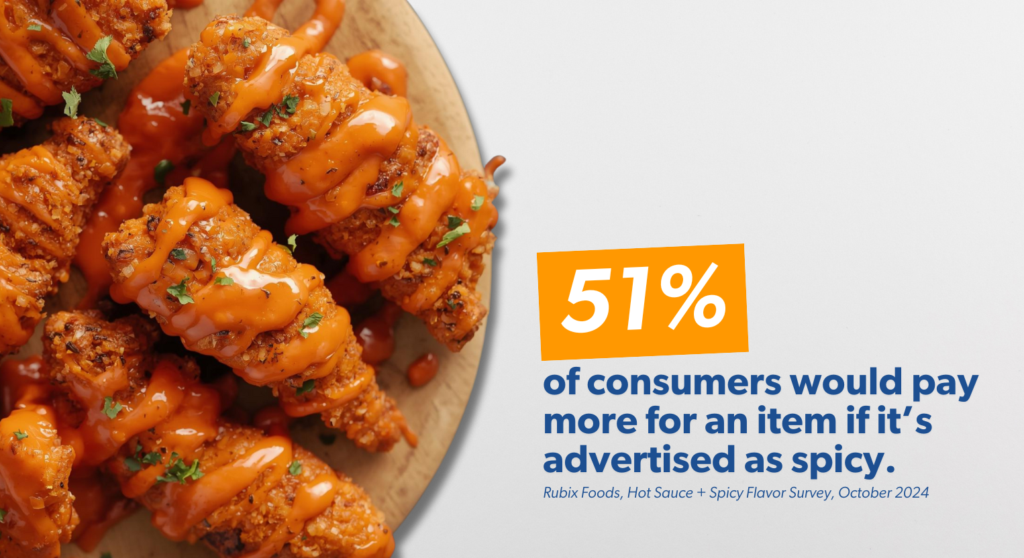
Consumers are gravitating towards flavor-building spices and chili varieties that add character, not just burn. The days of attention-grabbing, tear-jerking, must-sign-a-waiver spicy flavors are fading away. Through the work of The NEXT Flavor Network, we discovered that 74% of Gen Zers prefer a mild or medium heat level.1 2026 is all about heat with intentional, complementing flavors rather than “heat for heat’s sake.”
Consumers want approachable heat levels with smoky, tangy, fruity and slightly sweet layers resulting in irresistible swicy flavor combos. Pairing peppers like habanero or ghost pepper with unexpected flavors like mango, honey, or peach creates the craveable sweet-heat balance that consumers want to see on menus – especially chicken menus. 56% of consumers told us they’d go to a restaurant specifically for peach habanero chicken tenders, and 55% said they’d purchase hot honey buffalo chicken tenders if they were available on menus.2
The demand for complex heat is clear, and operators have an opportunity to deliver these bold, layered flavors through sauces, glazes, butters and cheese spreads that can be used across menu parts.
Texture is quietly stealing the spotlight and consumers are chasing that indulgent, velvety mouthfeel that comes from creaminess. Smooth and creamy textures are increasingly associated with quality, indulgence, and nostalgia, particularly among Gen Z consumers, who view these cues as both comforting and sophisticated. From the emotional pull of familiarity to the visual impact that fuels viral cravings, creamy textures check all the boxes for today’s hungry and curious consumers, delivering a sensory experience that satisfies on every level.
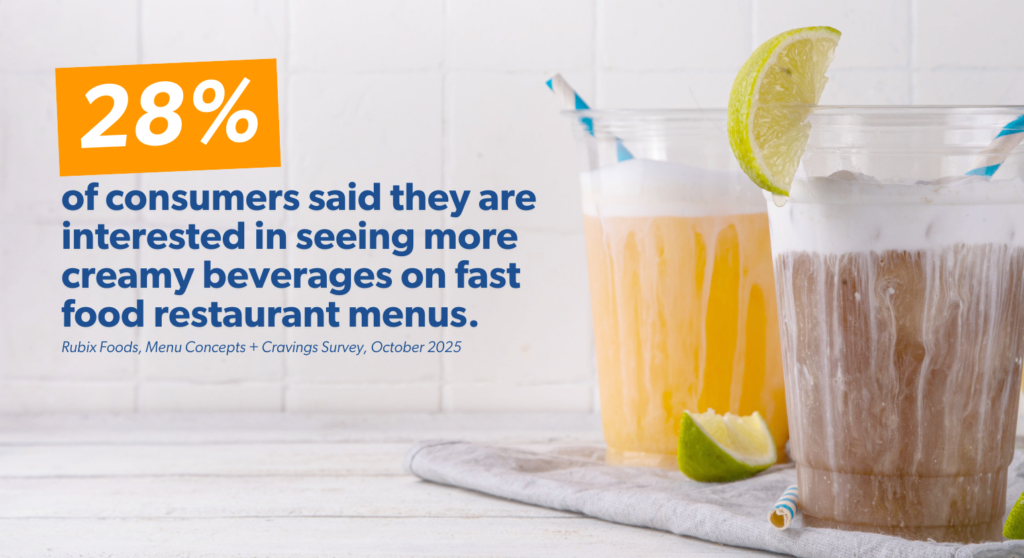
Where’s the biggest potential for the creamy texture craze? Beverages. 28% of consumers told us they are interested in seeing creamy beverages on fast food restaurant menus, and the beverages they want to see creamy versions of include coffee (41%), soda (30%), and lemonade (26%).3 The popularity of dirty sodas is spilling all over the internet with Google searches for the viral beverage growing 50% in 2025. Creamy beverages are trending during the holidays, too, with there being a 400% increase in searches for “creamy holiday drinks” last year.4
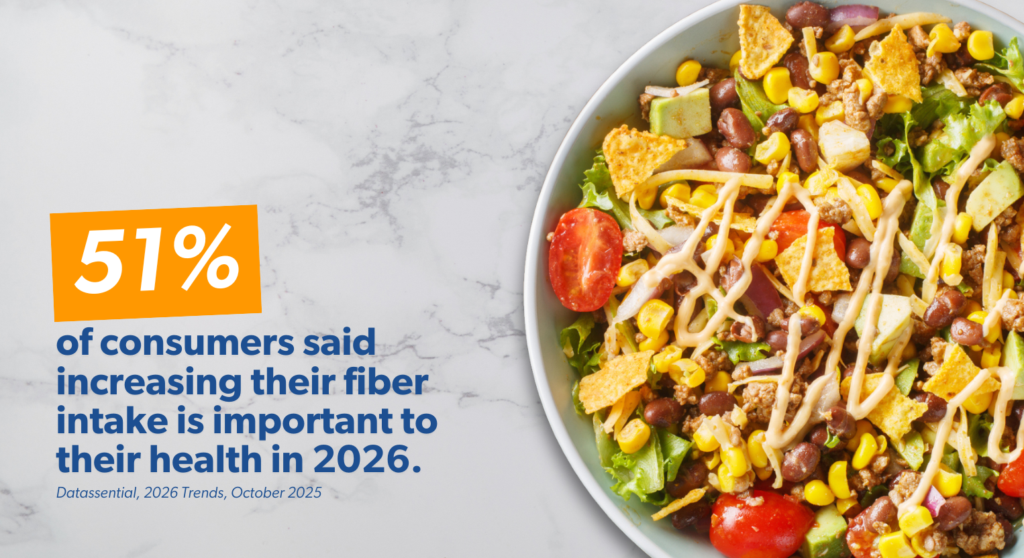
Today’s consumers aren’t feeding into diet culture. These days it’s all about how food makes you feel – physically and mentally. Consumers are eating more better-for-you foods, drinking beverages (not alcohol!) with added nutritional value, and refusing to sacrifice flavor for healthier choices. They want purposeful benefits like added fiber and protein without giving up indulgence – and that’s a happy medium that’s achievable.
The modern health halo is about permission, not restriction, fueling a new wave of mindful indulgence that blends functionality with flavor. Expect continued growth in protein and fiber-enhanced foods, prebiotic sodas and adaptogen-infused treats that support both wellness and joy in every bite and sip.
We asked consumers what functional benefits would motivate them to buy a food or beverage item and this is what they told us:
🟧 Energy Boosting – 58%
🟧 Brain Health Support – 50%
🟧 High Protein – 48%
🟧 Low Sugar – 43%
🟧 Focus – 41%
🟧 Gut Health Support – 40%5
“Value” was an industry buzzword in 2025, and it will become a way of life in 2026. Consumers care more about the value of what they are spending their money on than they do a particular price point. Sure, the price of a food or beverage item is very important, but people would rather spend more to have something that tastes good and delivers a great experience overall.
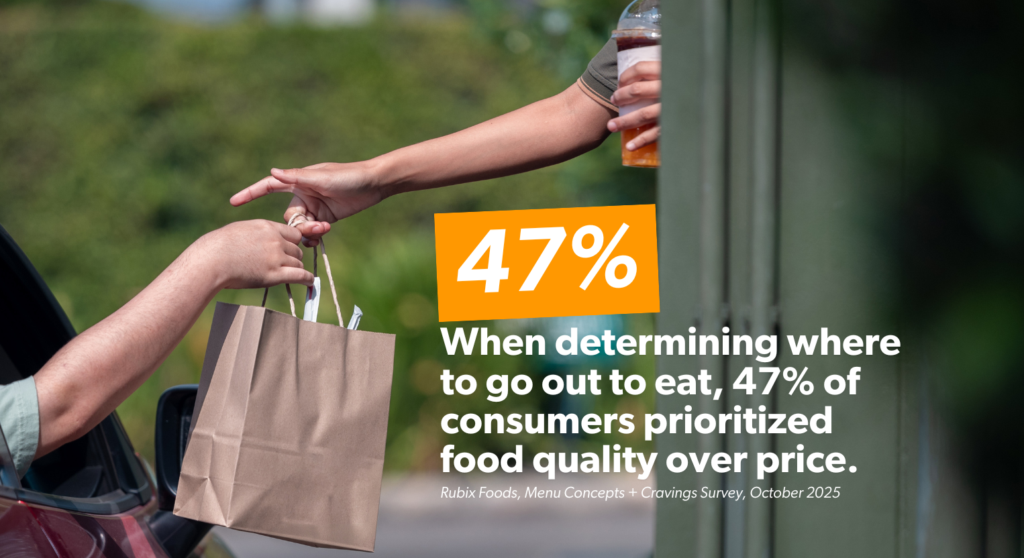
In a proprietary study, we asked consumers what is most important or valuable to them when choosing where to go out to eat and the majority (47%) prioritized food quality over price.3 Likewise, in a Datassential study, more than half of consumers said food from home tastes better than restaurant food. So, if you’re an operator looking to drive traffic, you have to give your customers a reason to spend their hard-earned dollars at your restaurant instead of eating at home or swinging through your main competitor’s drive-thru. And the best way to do that is to centralize your menu strategy around high-impact flavor profiles and high-quality concepts. Value today isn’t about doing more for less; it’s about giving consumers more of what matters.
Sauce is no longer a sidekick, it’s a strategy. Across restaurant menus, sauces have become one of the most powerful and profitable tools for innovation, giving operators the speed and flexibility to meet fast-changing consumer tastes.
Sauces are now the modern flavor playground where indulgence meets intention and creativity meets scalability. Some of the major sauce categories that consumers told us they’d like to see chain restaurants incorporate onto menus in 2026 are3:
🟧 Seasonal Flavors – florals in spring, apple in fall, etc.
🟧 Asian Flavors
🟧 Nostalgic Flavors
🟧 Latin American Flavors
🟧 Turning Items Into Flavors
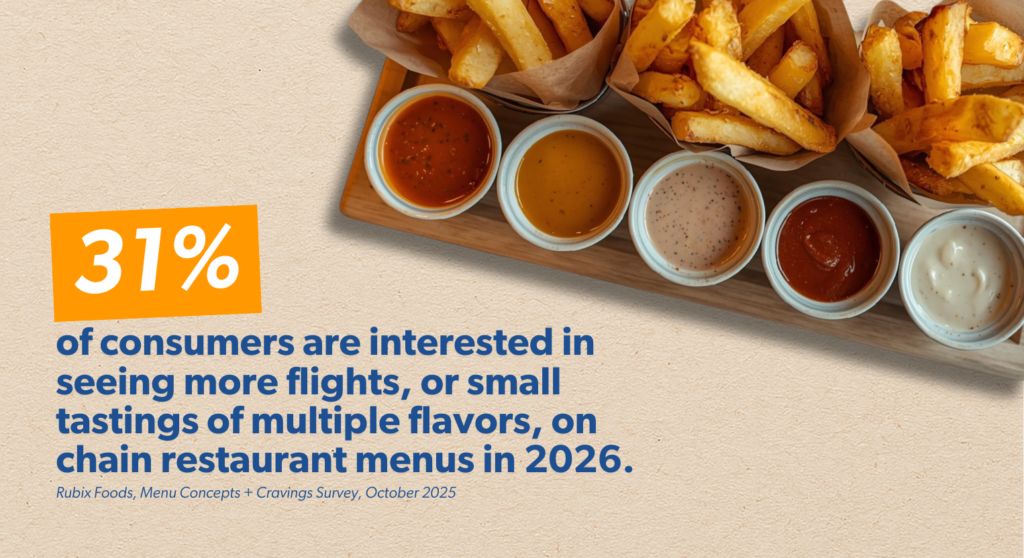
Leading brands are turning new sauces into viral limited-time offers, using flavor flights and signature dips to create cultural buzz and brand differentiation. The result? Higher engagement, stronger loyalty and incremental profit, all without the need for an operational overhaul.
Butter is making a big impact and now has a prominent spot on the new food pyramid. In 2026, compound butters are already showing signs as becoming the ultimate flavor must-have that brings operational efficiency to BOH and versatility to the menu. Hitting the market in both sweet and savory flavor profiles, butters are making menu items everywhere better. Some of the top butter flavors anticipated to grow on U.S. restaurant menus over the next 4 years are:
🟧 Chimichurri Butter (+65%)
🟧 Chipotle Butter (+65%)
🟧 Chili Butter (+63%)
🟧 Honey Butter (+22%)
🟧 Parmesan Butter (+13%)6
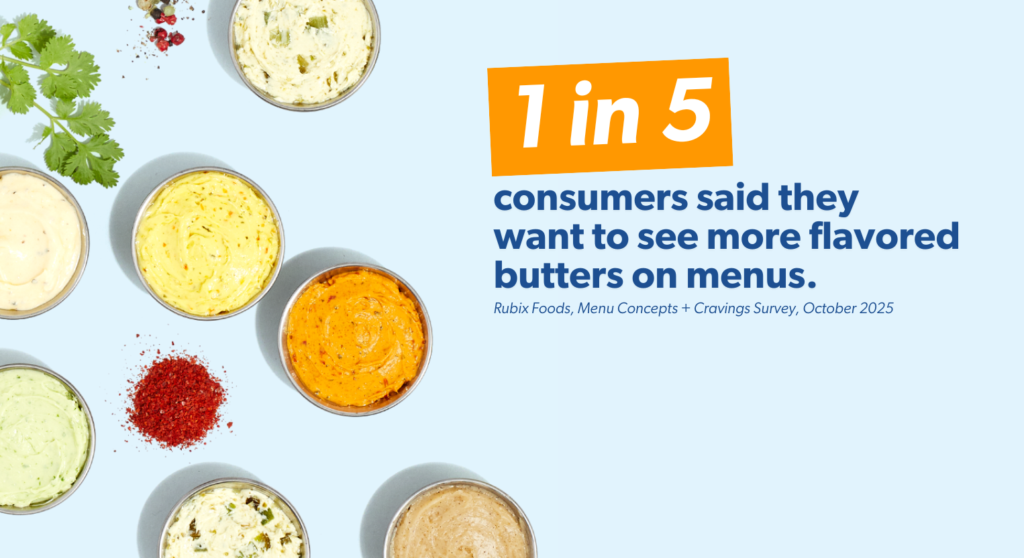
For consumers, butters are a conversation starter. There are over 1.6 million #butter posts on TikTok covering a range of topics from how to make your own compound butters, to reviews of the best store-bought butters, to debates about if butter is a health food, and ideas for different uses for butter. Plus, 1 in 5 consumers told us they want to see more flavored butters on menus in 2026.3 For operators, compound butters make innovation easy with the support of the right supplier. They’re scalable, flavorful, applicable across menu parts and day parts, and require minimal labor.
We help restaurant operators turn what’s next in flavor to what’s now on the menu. We create only where there’s a real customer need, a real business problem, or real whitespace to solve – and we do it fast without cutting corners. To speak to one of our experts about how to apply any of these trends to your menu, or to discuss a different solution you may be looking for, click here and tell us more.
1 – Rubix Foods, The NEXT Flavor Report, November 2024
2 – Rubix Foods, Concept Testing, January 2025
3 – Rubix Foods, Menu Concepts + Cravings Survey, October 2025
4 – Google Trends, December 2025
5 – Rubix Foods, Proprietary Research, August 2025
6 – Datassential, MenuTrends, January 2026