July 8, 2026 – People don’t fall in love with menu prices—they fall in love with menu items. And when they do, they’re surprisingly willing to pay for them. That’s the power of craveability. It’s often treated like a creative instinct, but in reality, it’s one of the most powerful economic drivers on the menu. To understand which premium upgrades actually feel worth the extra spend, our Consumer Insights team conducted a proprietary study to uncover what today’s consumers crave—and what they’ll gladly pay to get it.
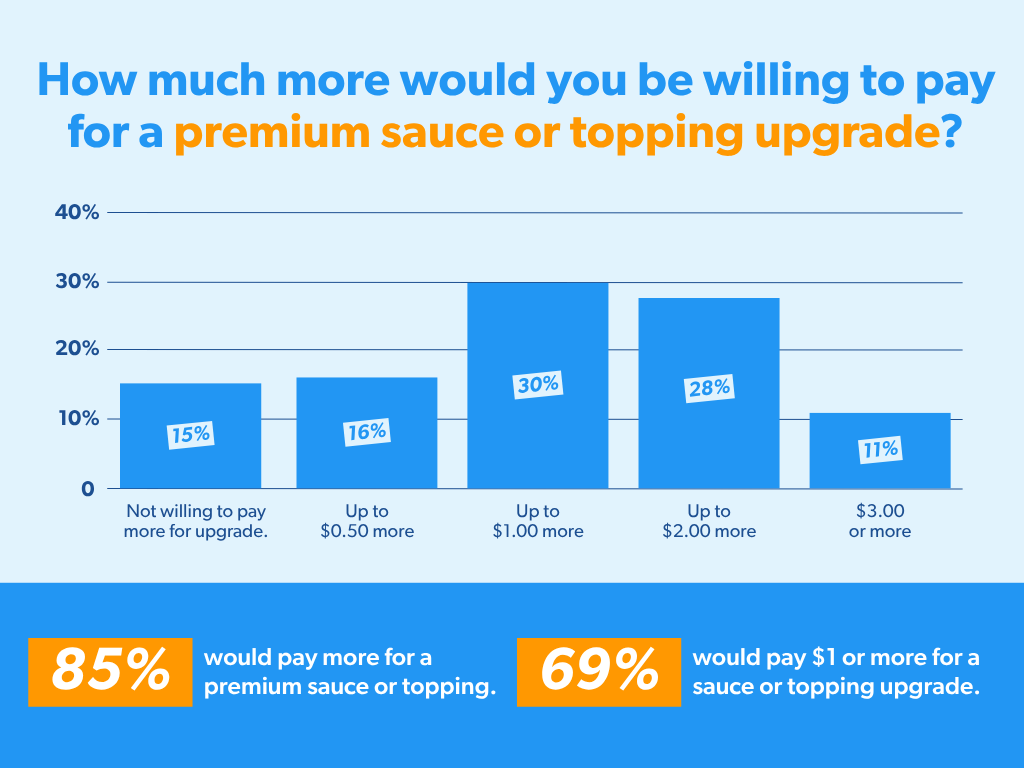
Sauces and toppings give new life to familiar favorites. One simple add-on to an existing menu item is all it takes to drive newfound appeal with consumers, add variety to a menu, and increase check averages. We found that 69% of consumers are willing to pay $1 or more for a premium sauce or topping upgrade.1 This is especially true for the sandwiches category. Chick-fil-A brought back the famous Honey Pepper Pimento Chicken Sandwich LTO this summer and is charging 37% more for it compared to their classic chicken sandwich.2 According to Nation’s Restaurant News, this LTO is Chick-fil-A’s best-selling seasonal offer of all time. And according to the sandwich’s loyal fan base across social media, it’s well worth the premium price point.
To better understand what actually makes food more craveable, we asked consumers which flavor and texture elements instantly make a menu item more appealing. Our study saw three themes rising to the top again and again: cheesy, buttery, and crispy. And for us, those results aren’t all that surprising. Consumers don’t spend their days dreaming about “premium toppings.” They dream about the first bite that makes them forget they’re eating lunch in a parking lot.
Rich melted cheese. Butter that soaks in without sogging out. Crispy bites that stay crispy until the last fry disappears. Those are the flavor and texture cues consumers consistently associated with craveability. And that’s exactly why we’re so bullish about development in cheese spreads, compound butters, and texture-preserving sauces. We don’t think they’re just “trending”, we think they’re the future of how flavor will be delivered on menus.
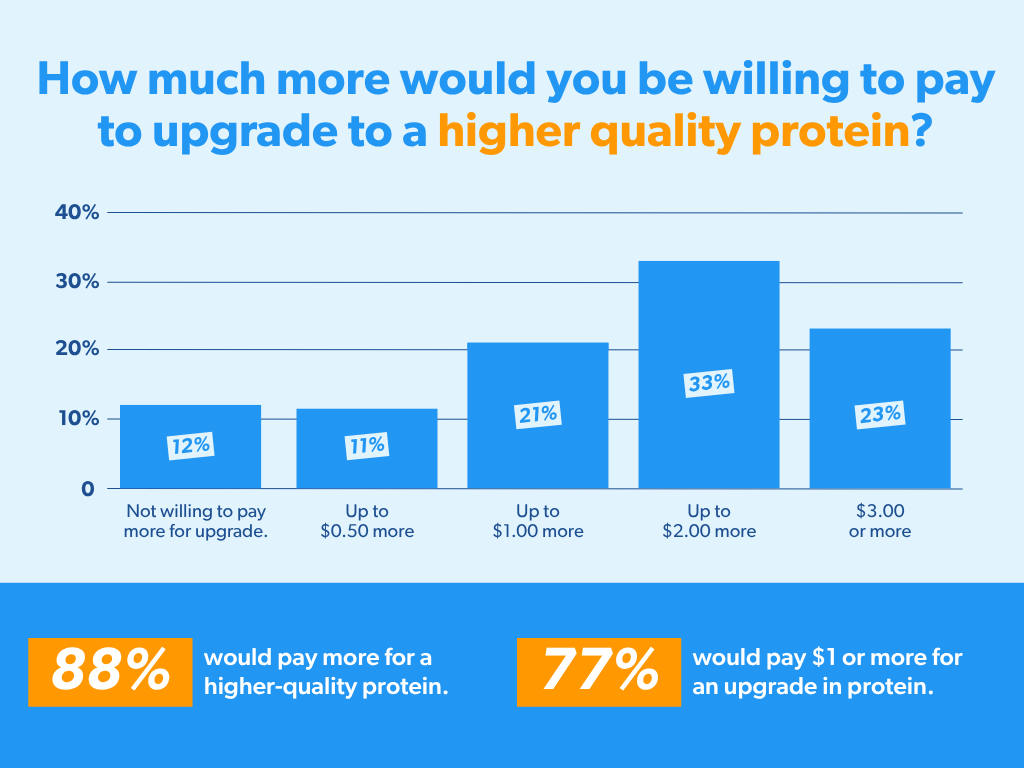
Conversations about protein have a firm grip on the food world right now and it’s putting operators in a tough spot. Protein prices, specifically beef, have consistently been on the rise… but going cheap will cost you in the long run. That’s because 77% of consumers are willing to pay $1 or more to upgrade to a higher quality protein. Among those consumers willing to pay more for a higher quality protein, 91% are also willing to pay $1 or more for a better side item1 signaling a growing appetite for a full, elevated meal experience that consumers aren’t afraid to spend their money on.
Hardee’s rolled out a lineup of menu items earlier this year featuring prime rib on a biscuit, burrito, and a burger to deliver a premium experience at all hours of the day. Anyone can offer a sausage, bacon or burger patty, but Hardee’s leveled up. Putting a higher quality protein at the forefront of a promotion helped differentiate the brand from the crowded competitive marketplace. Additionally, we’ve seen chains like Chipotle position sides of meat as a high-protein snack giving an existing SKU a low-lift way to appeal to protein passionate consumers. So, no matter how you slice it, the demand for high-quality protein (in any form) isn’t going anywhere.
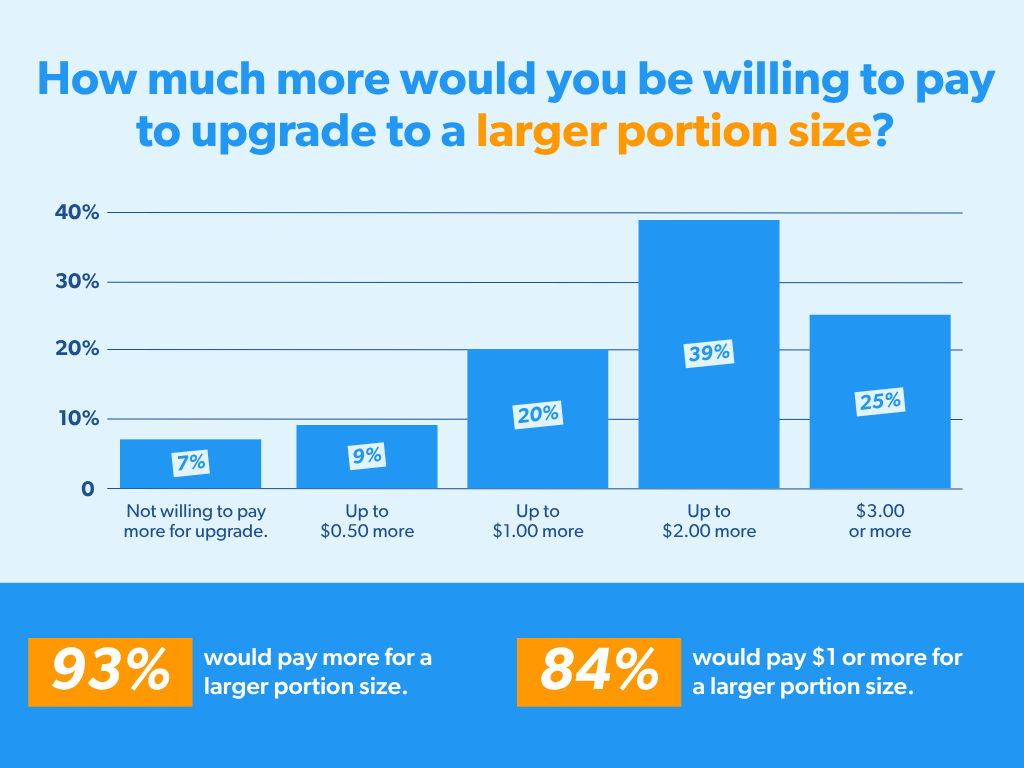
For some consumers, the size of the prize is what’s most important when determining what (if anything) they should be spending extra money on when eating away from home. 93% of participants from our study said they would pay an added cost for a larger portion size, with a whopping 25% willing to spend $3 or more to go bigger1. This particular audience also told us they look at food through the lens of taste, convenience and hunger. For them, the ambiance of a restaurant is great, but it’s the flavors and portion size of a meal that makes it all worthwhile.
Foodservice has been using the psychology of abundance for years. Five Guys made overflowing fries legendary by filling not just the cup, but the bag too. Panda Express earned a reputation for portions generous enough to become tomorrow’s lunch. Texas Roadhouse and Olive Garden understand that value starts before the entrée even hits the table, welcoming guests with warm rolls or unlimited soup, salad, and breadsticks. Even Red Lobster proved consumers will embrace premium price points when the value is obvious – its over-the-top $45 Lobsterfest Boil was identified by Datassential as a “volume driver.”3
The lesson here isn’t necessarily to serve more food. The best operators know that “worth” isn’t measured in ounces – it’s measured by how people feel. Sometimes all it takes is an extra roll, a handful of fries, or a complimentary side to leave guests thinking “that was worth every penny.” Those small investments in generosity cost very little but when consumers have a choice between you and the place down the street, they often deliver outsized returns in guest satisfaction and perceived value, and can be the difference between a one-time visit and a loyal regular.
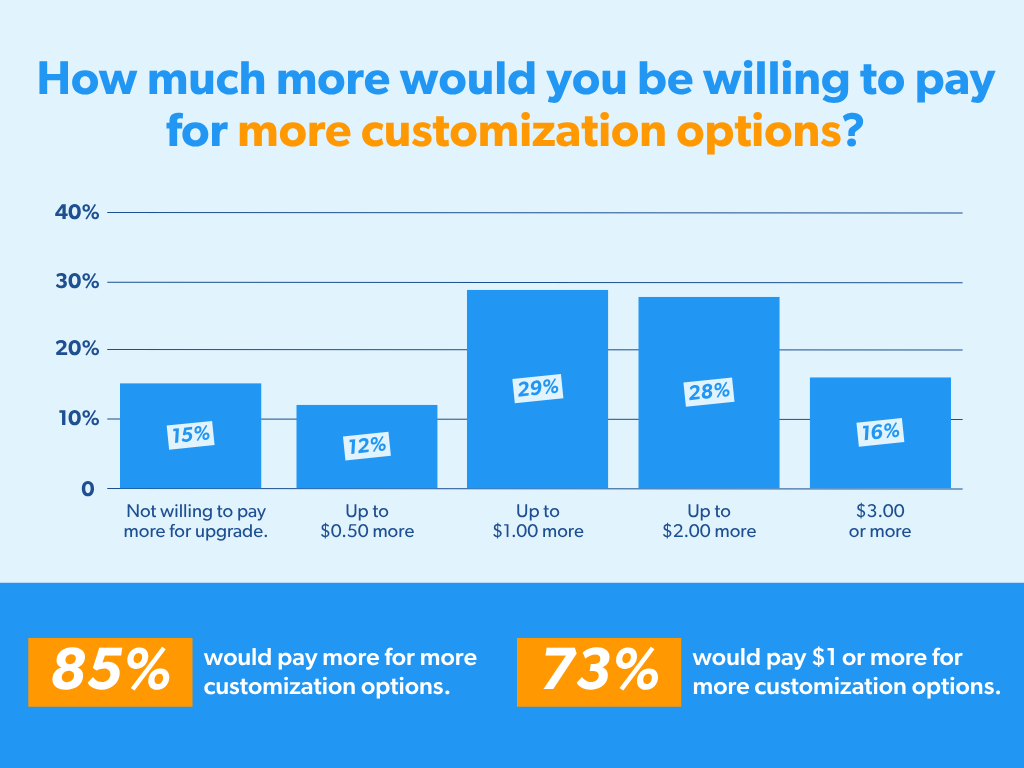
Our research shows that customization is particularly important to 18-34 year olds. 83% said they would spend $1 or more for additional customization options, compared to 73% of the general population1. Gen Zers and Millennials love to have options and the flexibility to get exactly what they want when they want. And what they want is often dependent on something that’s not easy to measure… emotions.
Among those who said they would spend $1 or more for customization, 35% admit that their orders depend entirely on their moods1. The more customization options available, the more opportunities you’ll have to capitalize on their impulsive purchasing. Beverages are a great platform for customization possibilities. Whether it be adding a flavored syrup to a lemonade, adding a creamy base to a dirty soda, or topping an iced coffee with cold foam, these small yet flavorful additions can turn a basic beverage into a premium treat that consumers will keep coming back for.
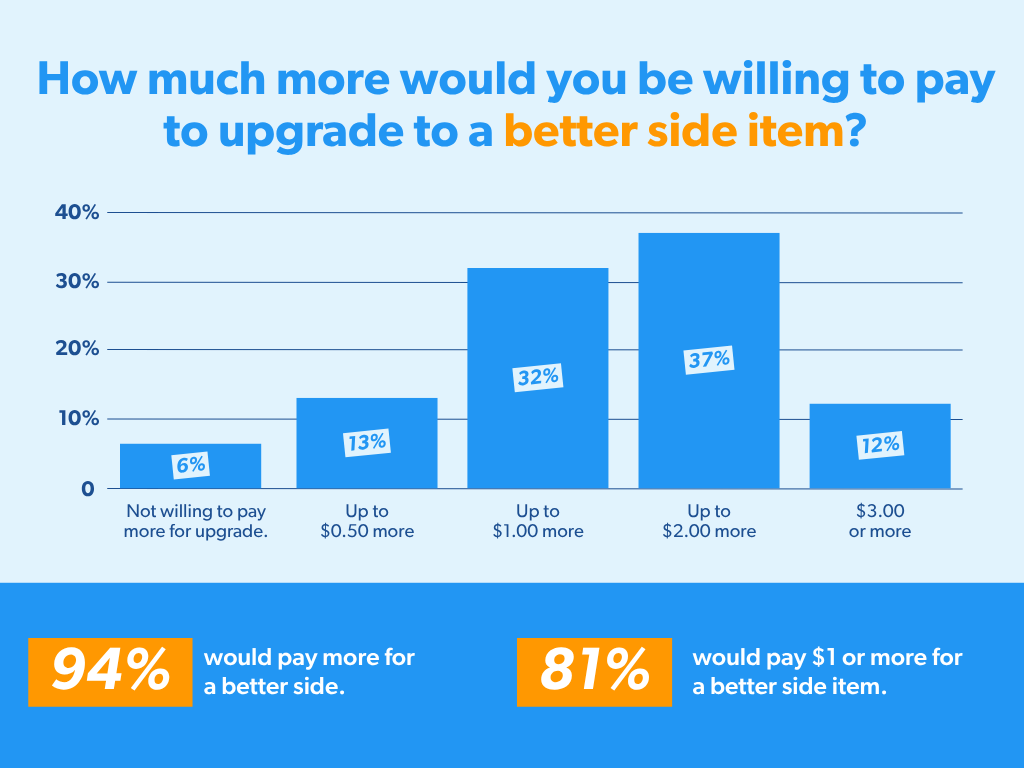
Sides are a low-risk way for operators to introduce new flavors to a menu and a low-risk way for consumers to try something different. Even though side prices have increased roughly 16% since January 20234, there’s a major opportunity to make this area of the menu stand out with premium options. Despite these already higher prices, 81% of consumers said they would pay $1 or more to upgrade to a better side item. So, how can you make a side item “better” without completely complicating your operation? Incorporating new flavors of sauces, glazes and aiolis to side items that your customers already know and love, like fries or tots, will be easy to execute in BOH.
The easiest dollar on the menu might be sitting next to the entree. Sides have quietly become one of foodservice’s most effective premiumization tools because they feel like an upgrade, not a compromise. Consumers are already accustomed to paying a little more for something unexpected, and brands like Jack in the Box have mastered the formula by transforming familiar favorites into crave-worthy LTOs like Sweet Reaper Mozzarella Sticks and Chili Crisp Tossed Curly Fries. They’re proof that “better” doesn’t have to mean more complicated. Sometimes all it takes is a craveable aioli, a bold glaze, or a flavor-packed toss to turn the tried-and-true sides you’re already serving into something guests can’t resist.
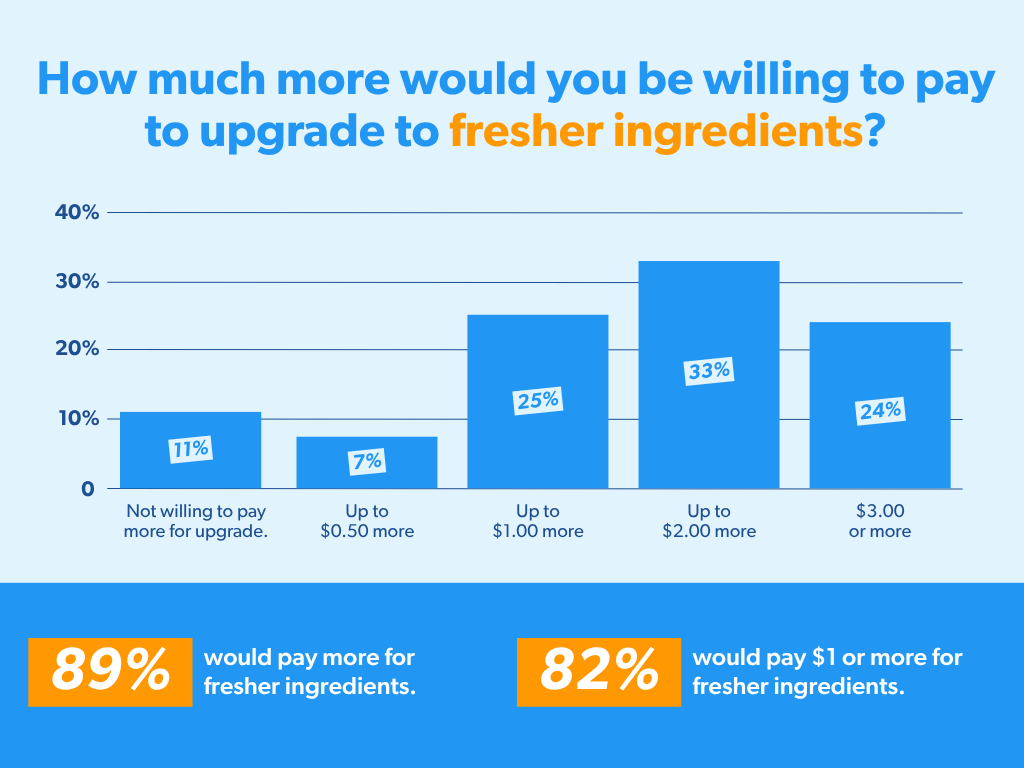
There is little to nothing that can stand between a consumer on the search for fresh ingredients and the trusted restaurants that will give it to them… even the price. 89% of consumers are willing to pay an upcharge to guarantee that they are receiving the freshest ingredients available1. And 1 in 5 of these consumers say higher quality ingredients are worth going out of their way for.1 This mindful demographic knows exactly what they want and will go to great lengths to get it. Menu concepts developed around seasonal ingredients will catch the attention of these consumers.
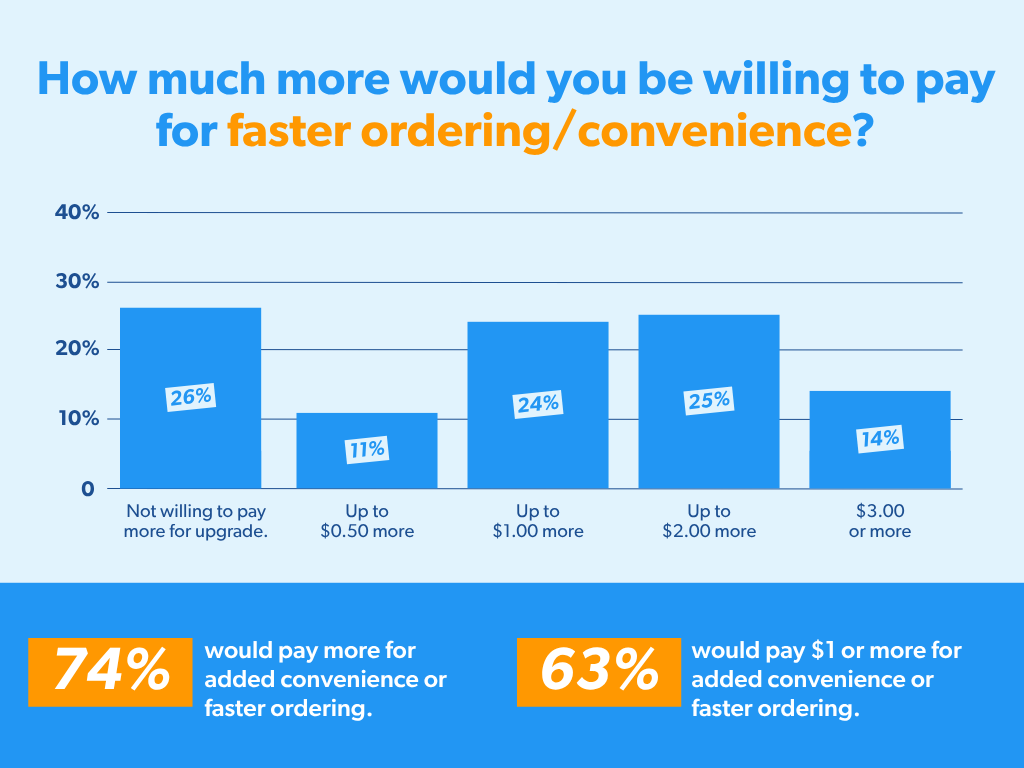
Speed and convenience have become an expectation. 26% of consumers said convenience and faster ordering is not something they are willing to pay extra for1 – it’s something they expect. If you can’t offer cost savings to your consumers, then you have to commit to making their lives easier in other ways. Among those who said they would pay more for faster ordering or convenience, 56% said a tightly curated menu that does a few things extremely well was most appealing to them1. Decision fatigue is real. Having less options to choose from and knowing anything chosen will be done right is *chef’s kiss* to today’s busy consumer.
The economics of craveability aren’t complicated. Consumers don’t pay more because you raised the price—they pay more because you gave them a better reason to. A richer sauce. A better cut of protein. A side worth upgrading. A meal that feels just a little more generous than expected. Those are the details that quietly transform “expensive” into “worth it”—and in many cases, worth paying more for. That’s the sweet spot where Rubix loves to play. So, when you’re ready to take your menu to the next level with upgrades your customers will happily pay for, make Rubix your first call.
1 – Rubix Foods, Restaurant Craveability & Economics Study, May 2026
2 – Rubix Foods, Proprietary Research, June 2026
3 – Datassential, Launches & Ratings, June 2026
4 – Datassential, Side Price Index Report, May 2026