October 2, 2026 – The product development cycle is long, and the lifecycle of a trend is short. By the time many menu developers figure out how to wrangle the flavor craze into something their customers would want to order, it’s already too late. Consumers have moved on to something else and it’s likely they went somewhere else to find it.
That’s why keeping a steady pulse on what consumers crave, what they’re tired of, and what can translate into profitable menu offerings is part of the daily grind at Rubix. Recently, our Consumer Insights team took to the virtual streets, where consumers are never shy about telling you what they want and what feels the most overdone to them. These are the major menu themes that consumers are fatigued by.
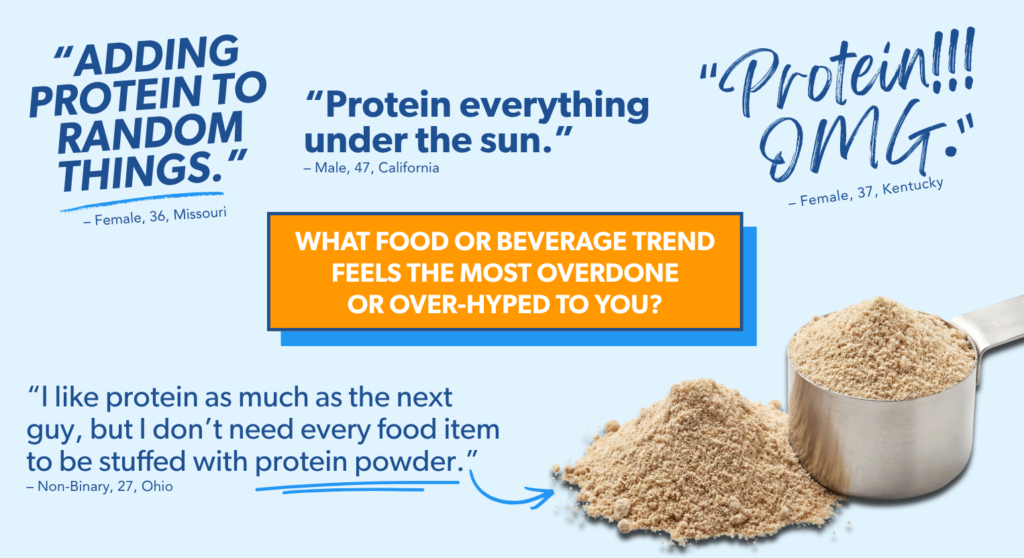
Everyone can agree that protein matters for a well-balanced diet. But consumers are drawing a line, and they don’t want or need added protein in everything. Heavy emphasis on the words “added” and “everything.” The protein health halo has lost its shine, feeling less like a health benefit and more like a marketing ploy.
We evaluated non-alcoholic beverage menu launches from June 2025 to July 2026 and found that items marketed as having high protein were priced 41% higher.1 That’s a significant markup for a claim that consumers don’t necessarily see a huge value of. Just 31% of consumers said they considered the high price a good value for the dollar amount, compared to 40% of consumers who said the same for the average non-alcoholic beverage.1
Incorporating more protein into a diet doesn’t have to be so complicated. Rather, it’s an opportunity to get back to the basics. Operators should shift their focus away from finding elaborate ways to add claims to their menus and put protein innovation back where it belongs: in the center of the plate.
Meat prices are rising, but consumers still see the value in spending money on it. 88% of consumers from our study said they would be willing to pay more for a higher quality protein with 23% claiming they would pay $3 or more for the upgrade.2 It’s easier to justify the added cost of better beef than a scoop of protein powder.
You can enhance the flavor of your existing proteins with marination systems that deliver bold taste and functionality, sauces and glazes that turn everyday builds into craveable creations, or with customizable flavored compound butters developed with your unique use-case in mind.
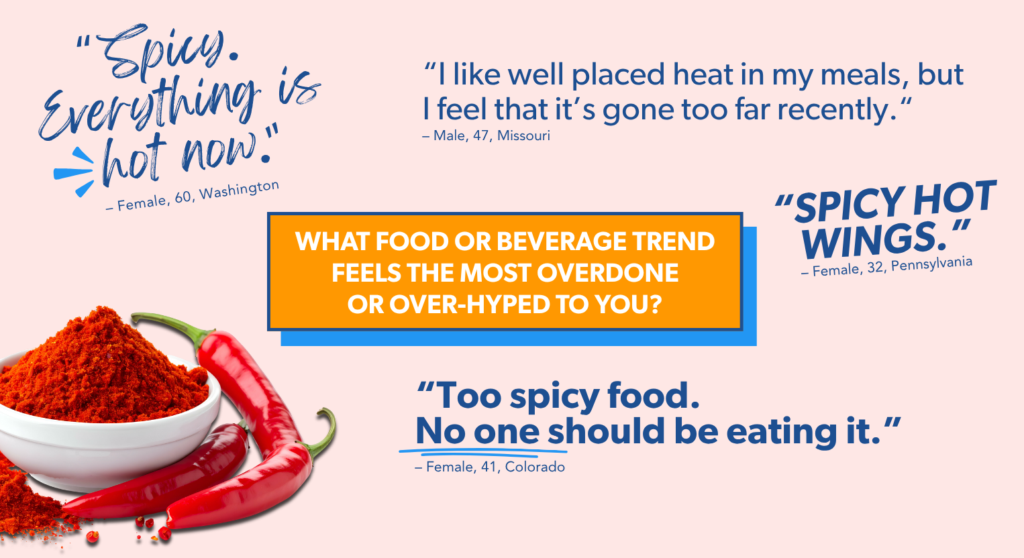
Overly spicy foods and flavors are cooling off. 26% of consumers from our study said they believe extremely spicy menu items won’t be popular in 2027.2 Spice lovers want heat that complements a meal without overpowering. That’s why flavors that require a burn warning, like scotch bonnet and ghost pepper, are expected to decline 23% and 14%, respectively, on U.S. restaurant menus over the next 4 years.3
“Spicy is becoming smarter, not necessarily hotter,” Ian O’Neil, Rubix Foods Director of Consumer Intelligence, explained in an interview with Bar and Restaurant News. “The goal is to create something you want another bite of rather than something you simply survive.”
Consumers agree with him, too. 74% prefer a mild or medium spice level.4 Think approachable peppers and trendy global flavors that can be incorporated into familiar formats, like ranch and aioli, and used across areas of the menu, like chicken and appetizers.
Product developers should keep an eye on these more balanced sources of heat:
🟧 Chili Crisp has seen consistent growth on menus since 2020 and is projected to grow 97% by 2030.3
🟧 Gochujang is gaining popularity in the QSR space, growing 13% over the past 4 years.3
🟧 Jalapeño Ranch, commonly found on sandwiches and wraps, has grown nearly 20% on casual dining menus in the past 12 months.3
🟧 Wasabi Aioli has broad appeal with 60% who have tried it saying they love/like it.3
🟧 Harissa, most often paired with chicken, is projected to grow 23% on fast casual menus over the next 4 years.3
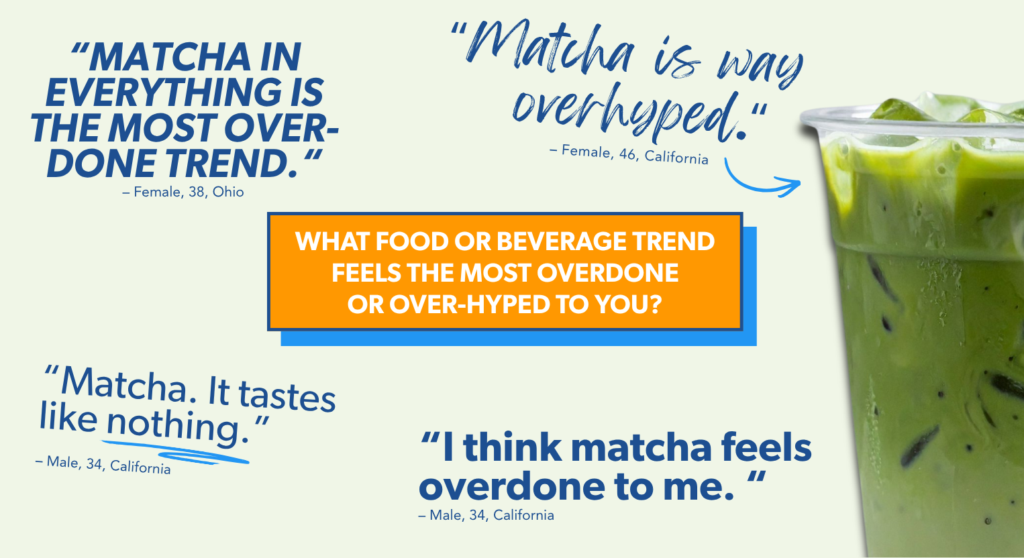
Matcha, matcha, matcha. You either love it or hate it. Though matcha is still wildly popular, consumers are starting to feel the flavor fatigue. Participants from our study continuously called out matcha as an overrated trend. What was once a rare find on beverage menus has become expected.
But not all matcha is created equal, and consumers can clock the difference. The extreme demand for matcha over the past decade has led to shortages of high-quality matcha from its original source, resulting in a mass-produced version of it that doesn’t hit the same way. Matcha’s authenticity is what made it appealing in the first place, so when it loses that genuine touch and taste, the magic is lost, too.
Matcha has met its match with ube. Ube’s vivid purple hue offers the same scroll-stopping visual drama as bright green matcha, but with more opportunities beyond the beverage menu. Ube has serious growth potential over the next 4 years across dessert (+61%) and breakfast (+80%) menus.5
We’ve also found ube to be a flavorful fit for brunch menus, too. During a brunch tasting event at the 2026 Flavor Experience, we passed out samples of Maduro & Ube Shots, made with silky banana anglaise, caramelized fried maduros, and an ube whipped topping. It was a showstopper.
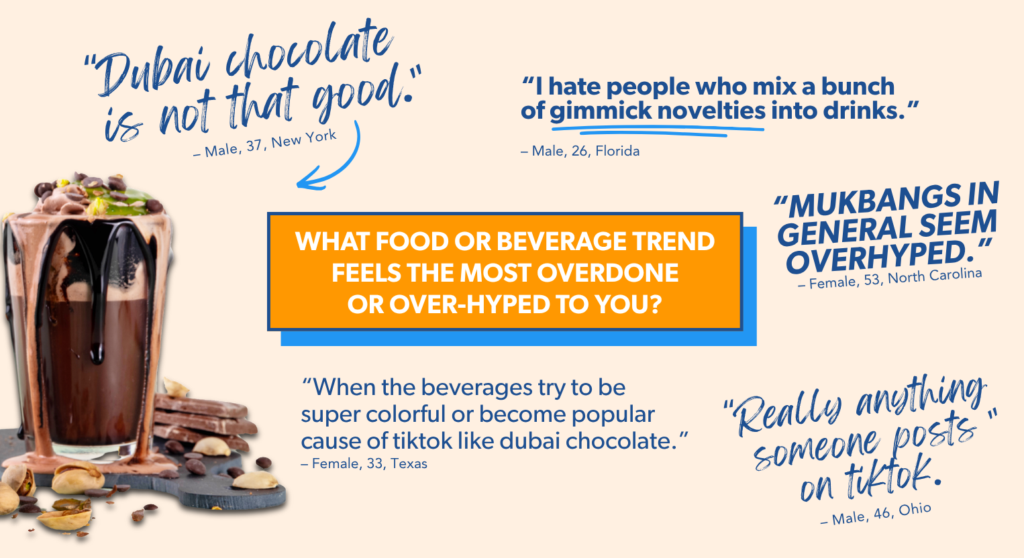
Viral food and beverage trends born on social media hold a legitimate place on menus and grocery store shelves. They drive traffic, attract new consumers, and keep brands relevant … when executed correctly. There’s a fine line between a trend that has staying power and a fad with no long-term value. The latter comes off as gimmicky and it’s turning people off. 1 in 4 consumers from our study said that viral foods are overhyped, and another 20% said they don’t care if a menu item has gone viral.2
While several “overrated” social trends came up in our research, one in particular had a large target on it: Dubai chocolate. 39% of consumers said they believe Dubai chocolate won’t be popular in 2027.2 Those who are drawn to Dubai chocolate have been there, done that, and posted about it. Its biggest fans will always have an affection for it, but it doesn’t have the same urgency or buzz that it did a year ago. That’s the danger of social-born trends. They tend to fade fast if the flavor isn’t versatile enough to be spread across different areas of the menu.
The lesson for operators: worry less about the number of impressions on a viral post and more about the impression your brands leaves on consumers. Use social media as inspiration for concept development and be wary of the fads. If it doesn’t feel authentic to your brand, it’s not going to land well with your target audience.
We see the shifts before they hit menus and help customers build for where taste is going … not where it’s been. That’s why so many of the industry’s most exciting food and beverage companies partner with us when they’re ready to turn “what if” into “what’s next.” Make Rubix your first call to find that unmistakable advantage – one rooted in real consumer cravings, practical menu application, and a sharper read on what deserves a place on the plate.
1 – Rubix Foods, Proprietary Research, September 2026
2 – Rubix Foods, Restaurant Craveability & Economics Study, May 2026
3 – Datassential, SNAP, September 2026
4 – Rubix Foods, The NEXT Flavor Report, November 2024
5 – Datassential, MenuTrends, September 2026